Living in Charlotte, NC: What You Need to Know
The Charlotte region is one of the fastest-growing metro areas in the Southeast, combining big-city jobs and amenities with a wide range of suburbs and small towns. From Uptown to the lake communities and the Gaston County towns just west, buyers have a remarkable range of lifestyles to choose from.
Whether you want walkable city living, a master-planned suburb, or a quieter riverfront town with metro access, the Charlotte area has an option for nearly every buyer.
If you are considering living in the Charlotte area in 2026, this guide covers the lifestyle, where people live, schools, commute times, cost of living, and the local real estate market.
Why people choose to live in the Charlotte area
The Charlotte metro has drawn steady relocation from across the country thanks to its job market, climate, and quality of life. Buyers are attracted to a major banking and tech hub with professional sports, an international airport, and easy access to mountains and beaches.
Just as important is the range of communities. Buyers can choose the energy of the city or the value and space of the surrounding towns, including Gaston County communities like Belmont, Mount Holly, and Cramerton just west of Charlotte.
- A strong, diversified job market
- Charlotte Douglas International Airport (a major hub)
- Professional sports, dining, and the arts
- Lake Norman, Lake Wylie, and Catawba River recreation
- A wide range of city, suburban, and small-town options
- Mild climate with mountains and beaches within a few hours
- Strong long-term population and housing growth
The Charlotte area is especially popular with relocation buyers who want metro opportunity with flexible lifestyle choices.
Charlotte area location and commute times
Charlotte sits in south-central North Carolina near the South Carolina line, at the center of a metro that stretches from Lake Norman in the north to the Gaston County towns in the west and Union County in the southeast. Approximate drive times to Uptown from popular areas:
| Area | Approximate Drive Time to Uptown |
|---|---|
| Belmont | 25-35 minutes |
| Mount Holly | 20-30 minutes |
| Cramerton / Gastonia | 25-40 minutes |
| Lake Norman (Huntersville / Cornelius) | 25-40 minutes |
| Charlotte Douglas International Airport | 10-20 minutes from many western suburbs |
For many buyers, the western Gaston County towns offer some of the best commuter value: close to the airport and Uptown, but with lower costs and a small-town feel.
The Charlotte area lifestyle
Big-city amenities with flexible living
Much of the Charlotte area's appeal is choice. Buyers can pick walkable urban neighborhoods, master-planned suburbs, lakefront communities, or historic small towns, all within the same metro.
Residents enjoy professional sports, a growing food and brewery scene, greenways, lakes, and the Catawba River, plus quick access to the mountains and coast for weekend trips.
Where people live in the Charlotte area
The metro offers distinct submarkets, each with its own price points and lifestyle. Many of our clients choose the western side of the metro in Gaston County for value and a quieter pace with strong Charlotte access, while others want to be closer in. Below is a neighborhood-by-neighborhood look at 16 of the most popular areas in and around Charlotte itself.
Explore Charlotte neighborhoods
Jump straight to a neighborhood, or use the map to see roughly where each one sits relative to Uptown.
Real map data via OpenStreetMap. Click any pin to jump to its guide below.
Uptown
Charlotte's skyline and cultural core
Uptown is Charlotte's downtown core, home to the skyline, most major employers, and the city's arts and sports venues. It suits buyers who want high-rise condo living within walking distance of work, culture, and nightlife.
Restaurants & Bars
- Mert's Heart & Soul
- 5Church Uptown
- The Diamond Restaurant
Landmarks & Parks
- Romare Bearden Park
- Mint Museum Uptown and the Levine Center for the Arts
- Spectrum Center and Truist Field
Things To Do
- Catch a Hornets, Panthers, or Charlotte FC game
- See a show at Knight Theater or the Blumenthal
- Explore the Levine Center for the Arts museums
South End
Charlotte's brewery and rail-trail district
South End is one of Charlotte's fastest-growing urban neighborhoods, built around the Rail Trail and the LYNX light rail line, mixing high-rise apartments, converted mill buildings, and a dense brewery and restaurant scene.
Restaurants & Bars
- Olde Mecklenburg Brewery (OMB)
- Wooden Robot Brewery
- Suffolk Punch
Landmarks & Parks
- The Rail Trail (a 3.5-mile linear park)
- Atherton Mill
- LYNX Blue Line stations
Things To Do
- Front Porch Sundays vendor market on the Rail Trail
- Brewery-hop along the trail
- Browse the shops at Atherton Mill
LoSo
Lower South End's brewery and entertainment overflow
LoSo, short for Lower South End, sits just south of South End along York Road near the Scaleybark light rail station, and has grown into its own walkable district of breweries, entertainment venues, and warehouse-style restaurants.
Restaurants & Bars
- Olde Mecklenburg Brewery
- Wooden Robot Brewery's LoSo taproom
- Goldie's
Landmarks & Parks
- Scaleybark light rail station
- The York Road corridor
Things To Do
- Catch an improv show at Comedy Arts Theater of Charlotte (CATCH)
- Try an escape room at Escape Tactic
- Play a round at Rally Pickleball
Dilworth
Charlotte's classic walkable historic neighborhood
Dilworth is one of Charlotte's oldest streetcar suburbs, known for tree-lined streets, bungalow and Colonial Revival homes, and the East Boulevard restaurant strip next to Freedom Park.
Restaurants & Bars
- 300 East
- YAFO Kitchen
- Dilworth Tasting Room
Landmarks & Parks
- Freedom Park
- East Boulevard
- Little Sugar Creek Greenway
Things To Do
- Walk or bike the Little Sugar Creek Greenway
- Catch a Freedom Park event or summer concert
- Dine along East Boulevard
Myers Park
Charlotte's historic canopy neighborhood
Myers Park is one of Charlotte's most established neighborhoods, known for its century-old oak canopy along Queens Road and large early-20th-century homes.
Restaurants & Bars
- Reid's Fine Foods
- Mellow Mushroom (Myers Park)
- Moosehead Grill
Landmarks & Parks
- Wing Haven Garden & Bird Sanctuary
- The oak canopy on Queens Road West
Things To Do
- Walk or run the "Booty Loop" around Queens University
- Visit the gardens at Wing Haven
SouthPark
Charlotte's upscale shopping and business district
SouthPark is Charlotte's premier shopping and dining district, anchored by SouthPark Mall, with a mix of luxury high-rises, established neighborhoods, and a major office corridor.
Restaurants & Bars
- The Cheesecake Factory
- Maggiano's Little Italy
- The Palm
Landmarks & Parks
- SouthPark Mall
- TowneBank Symphony Park
Things To Do
- Shop at SouthPark Mall
- Catch a Charlotte Symphony performance at Symphony Park
Plaza Midwood
Charlotte's eclectic arts and nightlife corridor
Plaza Midwood is one of Charlotte's most eclectic neighborhoods, mixing historic bungalows with an independent restaurant, bar, and vintage-shopping scene along Central Avenue.
Restaurants & Bars
- Thirsty Beaver Saloon
- Hattie's Tap & Tavern
- Soul Gastrolounge
Landmarks & Parks
- The Central Avenue commercial corridor
Things To Do
- Bar-hop along Central Avenue
- Browse local vintage and record shops
NoDa
Charlotte's historic arts district
NoDa (North Davidson) is Charlotte's original arts district, a former mill village turned home to galleries, murals, and live music venues, and one of the most walkable, distinctive neighborhoods in the city.
Restaurants & Bars
- NoDa Brewing Company
- Haberdish
- Cabo Fish Taco
Landmarks & Parks
- The Neighborhood Theatre
- Evening Muse
- NoDa's mural-lined streets
Things To Do
- NoDa Gallery Crawl (first and third Fridays)
- Catch live music at the Neighborhood Theatre or Evening Muse
University
College-town energy around UNC Charlotte
University City surrounds UNC Charlotte and has grown into a major regional employment hub, with a college-town mix of affordable dining, student housing, and corporate offices.
Restaurants & Bars
- Ciro's Italian Restaurant
- Boardwalk Billy's Raw Bar and Ribs
- Flying Saucer Draught Emporium
Landmarks & Parks
- UNC Charlotte campus and Botanical Gardens
- Jerry Richardson Stadium
Things To Do
- Catch a Charlotte 49ers football game
- Shop and dine at the Shoppes at University Place
Sugar Creek
A central corridor between Uptown and UNC Charlotte
Sugar Creek sits roughly halfway between Uptown and UNC Charlotte along I-85, a dense, in-town corridor built around Sugar Park and its recreation facilities.
Landmarks & Parks
- Sugar Park (73 acres, with an 18-hole disc golf course)
- Derita Creek Park
Things To Do
- Play a round of disc golf at Sugar Park
- Quick access to both Uptown and University City
Huntersville
Lake Norman's largest town
Huntersville is the largest town on Lake Norman, combining lake access with the shopping and dining of Birkdale Village, roughly 20-30 minutes north of Uptown.
Restaurants & Bars
- Midwood Smokehouse
- Duckworth's Grill & Taphouse
- Red Rocks Cafe
Landmarks & Parks
- Birkdale Village
- Lake Norman
Things To Do
- Boating and lake days on Lake Norman
- Shop and dine at Birkdale Village
- Discovery Place Kids
Steele Creek
Southwest Charlotte along Lake Wylie
Steele Creek is a growing southwest Charlotte area along Lake Wylie, popular for its access to nature, outlet shopping, and the airport.
Landmarks & Parks
- McDowell Nature Preserve
- Charlotte Premium Outlets
- Thomas McAlister Winget Park
Things To Do
- Hike or camp at McDowell Nature Preserve
- Boating on Lake Wylie
- Play a round at Topgolf
Ballantyne
A master-planned suburb in far south Charlotte
Ballantyne is a large, master-planned community in far south Charlotte, built around a corporate office park and Ballantyne Village's upscale shops and restaurants.
Restaurants & Bars
- Mellow Mushroom
- Cabo Fish Taco
- Eggspectation
Landmarks & Parks
- Ballantyne Village
- Ballantyne's Backyard (a 100-plus acre community park)
Things To Do
- Shop and dine at Ballantyne Village
- Walk the trails at Ballantyne's Backyard
Pineville
Small-town charm anchored by Carolina Place
Pineville is a small, historic town on Charlotte's southern edge, home to Carolina Place Mall and a walkable historic Main Street district near the James K. Polk Historic Site.
Restaurants & Bars
- Waterbean Coffee (Main Street)
- Carolina Scoops
Landmarks & Parks
- Carolina Place Mall
- James K. Polk Historic Site
- Historic downtown Pineville
Things To Do
- Shop at Carolina Place Mall
- Downtown Pineville Farmers Market (Saturdays)
- Visit the James K. Polk Historic Site
Matthews
A historic rail town with a walkable downtown
Matthews is a historic rail town on Charlotte's southeast side, with a walkable downtown built around the restored 1880s train depot.
Restaurants & Bars
- Seaboard Taproom & Wine Bar
- Santé Restaurant
Landmarks & Parks
- The historic Matthews Train Depot
- Matthews Heritage Museum
- Renfrow Hardware
Things To Do
- Matthews Community Farmers Market (Saturdays)
- Tour the Matthews Heritage Museum
Mint Hill
A quiet, still-rural town on Charlotte's east side
Mint Hill is one of the more rural, small-town communities in the Charlotte area, still surrounded by farmland and wooded neighborhoods east of the city.
Restaurants & Bars
- The Hill Bar and Grill
- Barking Duck Brewing Company
- Carolina Creamery
Landmarks & Parks
- Carl J. McEwen Historic Village
- Stevens Creek Nature Center and Nature Preserve
Things To Do
- Visit the Carl J. McEwen Historic Village living-history museum
- Hike Stevens Creek Nature Preserve
| Area | Vibe | Best For |
|---|---|---|
| Uptown | Urban, high-rise | City living near work and culture |
| South End | Breweries, rail trail | Walkable urban lifestyle |
| LoSo | Breweries, entertainment | South End overflow, still walkable |
| Dilworth | Historic, tree-lined | Classic in-town charm |
| Myers Park | Historic, prestigious | Established, tree-canopied streets |
| SouthPark | Upscale, business district | Shopping and office access |
| Plaza Midwood | Eclectic, artsy | Independent dining and nightlife |
| NoDa | Arts district | Galleries, murals, live music |
| University | College-town | UNC Charlotte area affordability |
| Sugar Creek | Central corridor | Quick access Uptown and University |
| Huntersville | Lake town | Lake Norman lifestyle |
| Steele Creek | Southwest, nature | Outdoor recreation and outlets |
| Ballantyne | Master-planned suburb | Corporate access, family-friendly |
| Pineville | Small-town, retail hub | Shopping and historic charm |
| Matthews | Historic rail town | Walkable small-town downtown |
| Mint Hill | Rural, quiet | Space and a slower pace |
Schools in the Charlotte area
The Charlotte metro is served by several school districts, including Charlotte-Mecklenburg Schools, Gaston County Schools, and Union County Public Schools, along with many charter, private, and higher-education options. School preferences vary widely by household and submarket, so buyers should always verify current zoning and district information before purchasing.
Higher education in the region includes UNC Charlotte, Belmont Abbey College, Gaston College, and several community college campuses.
Cost of living in the Charlotte area
The cost of living varies significantly across the metro. Urban and lakefront areas tend to command a premium, while the western Gaston County towns generally offer more home and land for the money while keeping strong Charlotte access.
Compared with many larger U.S. metros, the Charlotte area is often seen as relatively affordable, which is part of why it continues to attract relocation buyers. Budgets should account for the submarket, commute, taxes, and lifestyle priorities.
Charlotte area real estate market
Sustained demand across a growing metro
The Charlotte region continues to see strong buyer demand driven by job growth and in-migration. Conditions vary by submarket and price point, so local guidance matters when comparing the city, the lake areas, and the western suburbs.
Buyers should be prepared for competitive listings in popular areas, along with new construction opportunities across the suburbs. Many of our clients find the best combination of value and access in Gaston County.
Relocation buyers come from across North Carolina, the Northeast, the Midwest, and higher-cost metro markets.
Things to do in the Charlotte area
The metro offers professional sports, culture, outdoor recreation, and quick access to the mountains and coast.
Outdoor recreation
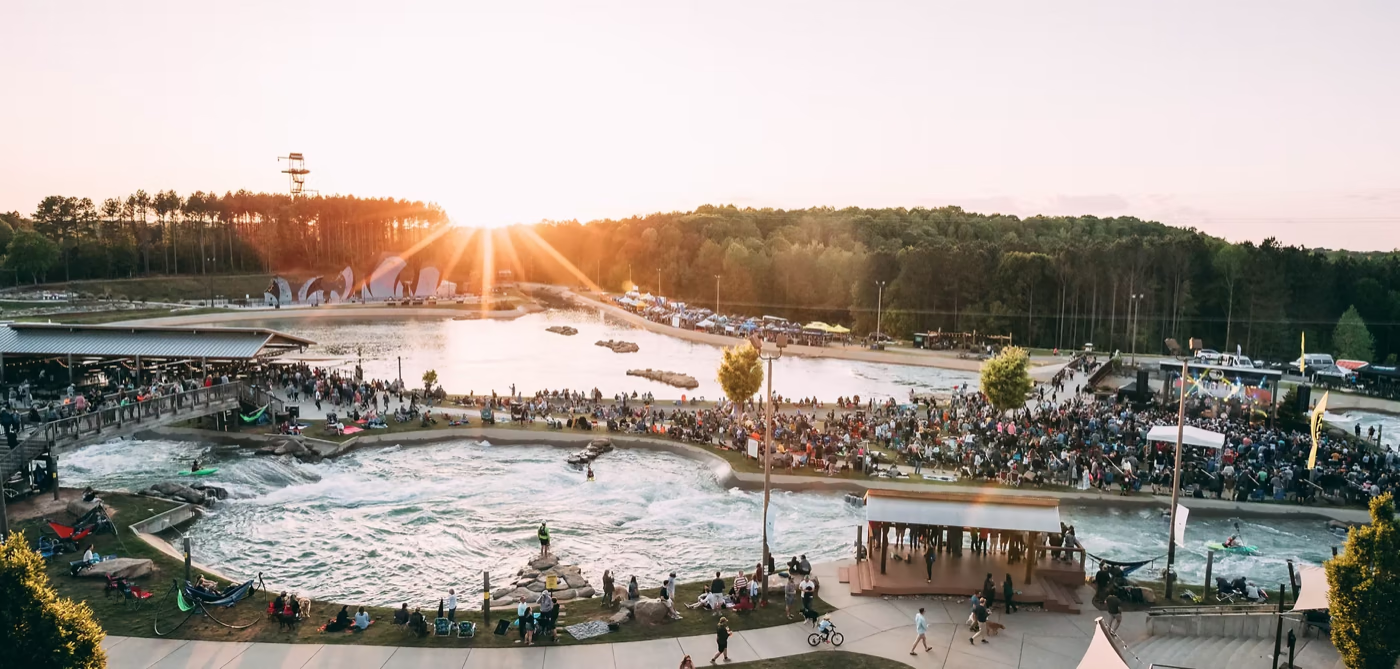
- U.S. National Whitewater Center
- Lake Norman and Lake Wylie
- Catawba River and regional greenways
- Daniel Stowe Botanical Garden
Entertainment and culture
- Carolina Panthers, Charlotte Hornets, and Charlotte FC
- Uptown museums, theaters, and dining
- Festivals, breweries, and live music
- Day trips to the mountains and the coast
Who the Charlotte area may be best for
The Charlotte metro fits a wide range of buyers because of the variety of communities and price points.
| Buyer Type | Why the Charlotte Area Appeals |
|---|---|
| Relocation buyers | Strong job market with a range of lifestyle options. |
| Veteran and military buyers | Airport access, VA loan opportunities, and long-term value. |
| Value-focused buyers | Western Gaston County towns offer space and access for less. |
| Move-up buyers | Lakefront, suburban, and luxury options across the metro. |
Final thoughts
The Charlotte area continues to attract buyers looking for opportunity, lifestyle variety, and long-term value.
Whether you want urban living, a lakefront community, or value and space in the Gaston County towns just west of the city, Carolina Premier Properties can help you find the right fit and navigate the market with confidence.
Frequently asked questions
Is the Charlotte area a good place to live?
Yes. The Charlotte metro is one of the fastest-growing regions in the Southeast, offering a strong job market, an international airport, professional sports, and a wide range of city, suburban, and small-town communities.
Where should I live near Charlotte for the best value?
Many value-focused buyers look to the western side of the metro in Gaston County, including Belmont, Mount Holly, and Cramerton, which offer lower costs and a small-town feel with quick access to the airport and Uptown.
How is the commute around Charlotte?
Commutes vary by submarket. Many western Gaston County towns reach Uptown in roughly 20-40 minutes and the airport in 10-20 minutes, while lake and south-side suburbs vary with traffic.
Is the Charlotte area expensive?
Costs vary widely by submarket. Urban and lakefront areas command a premium, while the western suburbs are often more affordable. Compared with many large metros, the Charlotte area is generally seen as relatively affordable.
Is the Charlotte area growing?
Yes. The region continues to experience strong population, job, and housing growth across the metro.
What are the most popular Charlotte neighborhoods?
Popular in-town neighborhoods include Uptown, South End, LoSo, Dilworth, Myers Park, SouthPark, Plaza Midwood, and NoDa, while University City, Sugar Creek, Steele Creek, Ballantyne, Pineville, Mint Hill, Matthews, and Huntersville offer more suburban options across the wider metro.
Which Charlotte neighborhoods are best for walkability and nightlife?
South End, LoSo, NoDa, and Plaza Midwood are generally considered the most walkable neighborhoods for dining, breweries, and nightlife, while Dilworth and Myers Park offer a quieter, more residential version of in-town walkability.
Sources and local references
Local references include the City of Charlotte, the Charlotte Regional Business Alliance, Go Gaston NC, and Carolina Premier Properties local market observations.
City of Charlotte Charlotte Regional Business Alliance Go Gaston NC